- Spain
- Driving
Driving in Spain
Speed limits, alcohol, what to carry and the fines: the rules a visiting driver needs.
- 120 km/h motorways (autopista, autovía)
- 90 km/h other roads outside towns
- 50 km/h town streets with 2+ lanes each way
- 30 km/h town streets with one lane each way
- 20 km/h shared streets (road and pavement at the same level)
Speed limits
For cars and motorcycles the limit is 120 km/h on motorways (autopista and autovía) and 90 km/h on other roads outside towns. With a trailer, and in motorhomes over 3,500 kg, it is 90 km/h on motorways and 80 km/h on other roads. In towns the limit is 50 km/h on streets with two or more lanes in each direction, 30 km/h on streets with one lane in each direction and 20 km/h where the road and the pavement are at the same level.
The old rule that let you go 20 km/h over the limit to overtake was abolished in March 2022. On motorways you must not drive slower than 60 km/h. The signs always take precedence over these general limits.
Facts checked: October 2026
Alcohol and drugs
The general limit is 0.5 g of alcohol per litre of blood, or 0.25 mg per litre of exhaled air. Drivers in their first two years and professional drivers have a lower limit: 0.3 g/l, or 0.15 mg/l. You must take a breath or drug test whenever the police ask.
Driving over the limit costs 500 €, and 1,000 € above twice the limit or with drugs in the body. Driving above 1.2 g/l (0.6 mg/l in breath) and refusing the test are crimes, and the car can be immobilised. A lower general limit has been proposed in Parliament, but in October 2026 it was not law.
Facts checked: October 2026
What to carry
Since 1 January 2026 cars registered in Spain must carry a connected V-16 warning light instead of warning triangles; without it the fine is 80 €. The DGT states that cars registered in other countries may keep using warning triangles, or the device required in their own country. If you hire a car in Spain, check that the V-16 light is on board.
Cars registered in Spain, hire cars included, must also carry a certified reflective vest and a spare wheel or a tyre repair kit; anyone who leaves a car on the road or the hard shoulder outside towns must wear the vest. Spare bulbs are no longer required, and spare glasses are not on Spain’s list of required equipment. Children 135 cm tall or shorter must use a child seat suited to their height and weight and, with few exceptions, sit in the back.
Facts checked: October 2026
Rules you get fined for
Holding a mobile phone while driving costs 200 € and 6 points on a Spanish licence, and headphones are banned too. Radar detectors are illegal; apps that only warn of speed cameras are allowed. When you overtake a cyclist, leave at least 1.5 m, and outside towns drive at least 20 km/h below the limit. Since 1 October 2026, in queues on motorways and dual carriageways drivers must leave a free corridor for emergency vehicles.
On roundabouts, vehicles already on the roundabout have priority unless signs say otherwise, and the outer lane is the one to stay in when it is free. Leave the roundabout from the outer lane; if you miss your exit, go round again. In tunnels, switch on dipped headlights. At a fuel station the engine must be off while you refuel, and the station staff may not serve a car with its engine or lights on.
Facts checked: October 2026
Signs you may not know
Spain renewed its official catalogue of road signs on 1 July 2025. Signs already in place may stay until they wear out, so old and new designs stand side by side, and some familiar-looking signs now mean something else. These are the ones that most often surprise visiting drivers.
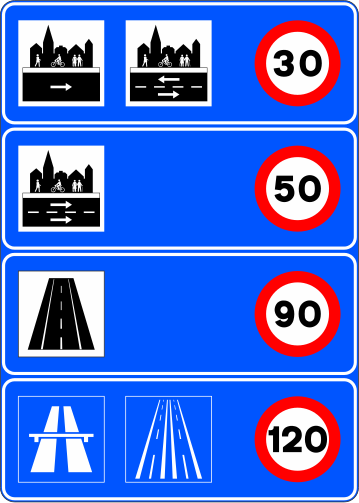 S-940 Spain’s general speed limits: 30 km/h on town streets with one lane each way, 50 km/h on town streets with two or more lanes each way, 90 km/h on other roads and 120 km/h on motorways.
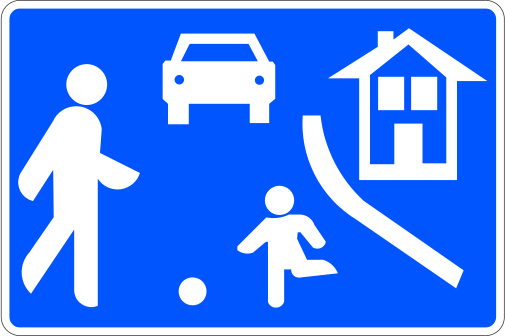 S-28 Zone for staying and playing: at most 10 km/h, pedestrians have priority and may use the whole street, children may play, and you may park only where marked. Before July 2025 the same sign allowed 20 km/h; now it always comes with a 10 km/h sign.
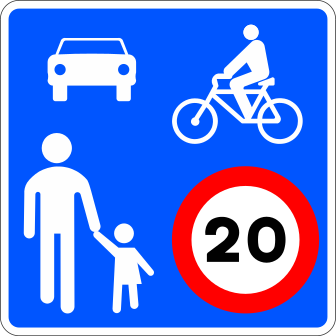 S-47 Shared zone: at most 20 km/h, pedestrians have priority and may use the whole street, and you may park only where marked. Unlike S-28, games are not allowed.
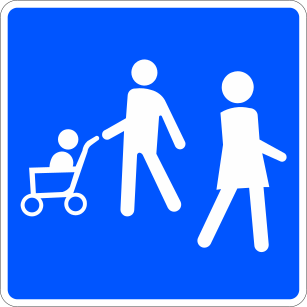 S-30a Pedestrian zone: the street is reserved for people on foot. A panel below the sign may list exceptions, such as residents or deliveries.
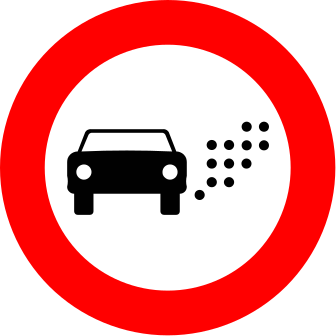 R-120 No entry depending on the vehicle’s environmental label: the entrance to a low-emission zone. A panel below the sign or a board says which DGT environmental labels may enter.
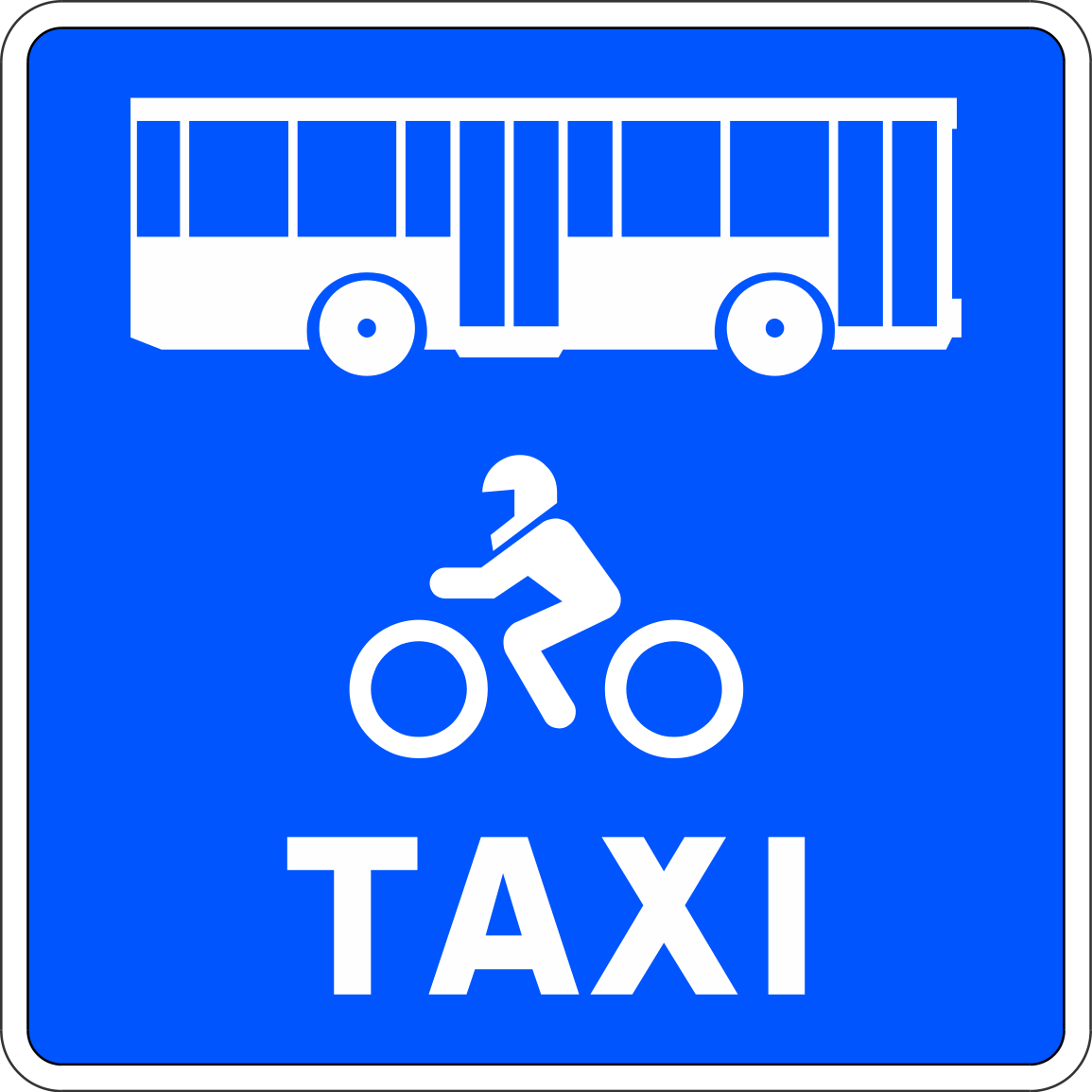 S-51a Lane reserved for the vehicles shown, such as buses, taxis or motorcycles. Where its line is dashed, other vehicles may use it only for a manoeuvre such as turning, giving way to the vehicles shown, and never to stop, park, turn round or overtake.
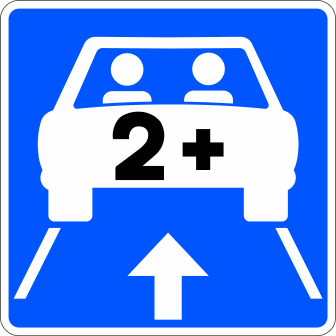 S-51b High-occupancy (VAO) lane: only for vehicles carrying at least the number of people shown.
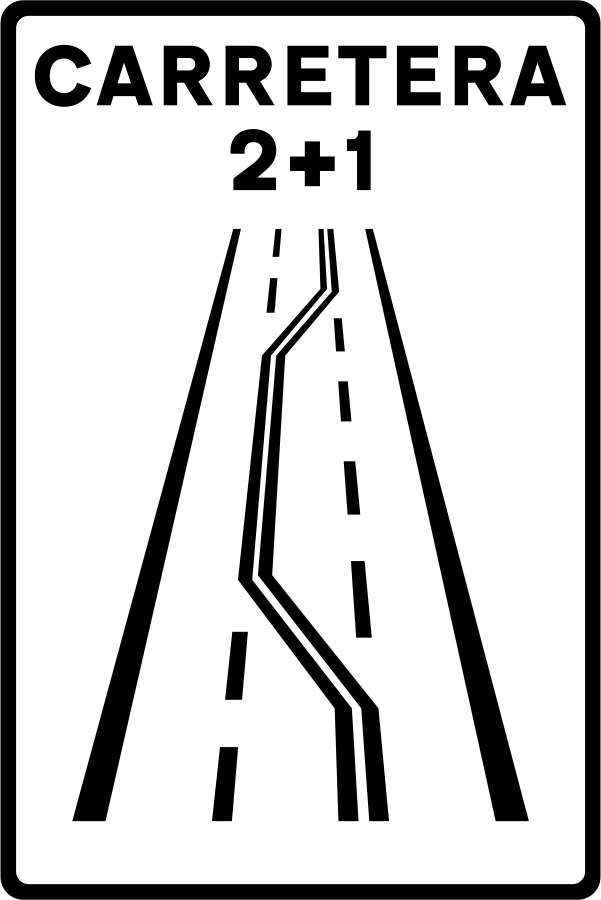 S-1c Start of a 2+1 road: three lanes for both directions, where the middle lane is for overtaking and changes direction section by section.
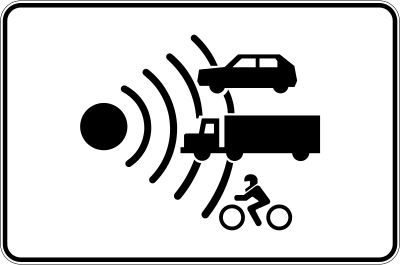 S-991a Speed check ahead, at one point or over a whole section (average speed). On motorways the same sign is blue (S-991b).
 S-892 A panel under another sign: cameras watch that sign, and fines are issued automatically.
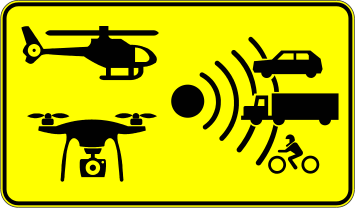 S-991g Speed may be checked from the air on this stretch, by helicopter or drone.
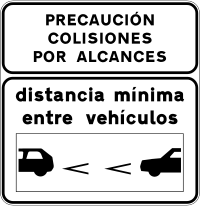 S-992a Minimum gap: keep at least as many of the chevrons painted on the road between you and the vehicle ahead as the sign shows. Used where rear-end collisions are frequent.
Sign drawings from Wikimedia Commons. Authors and licences: R-120 SerrgioFdezz, CC BY-SA 4.0; S-1c Autopistero20502020, CC BY-SA 4.0; S-51b มองโกเลีย๔๔, CC BY 4.0; S-992a มองโกเลีย๔๔, CC BY 4.0.


Facts checked: October 2026
Fines for visitors
A driver who does not live in Spain is asked to pay a fine on the spot, by card or in cash in euros, and for most offences can still get the 50 % reduction for paying at once. If you cannot pay, the car may be immobilised. With a hire car, the hirer is responsible for the fine.
Spain shares data on serious traffic offences, such as speeding, drink-driving and using a phone, with the other EU countries, so a fine can follow you home.
Facts checked: October 2026
Motorways, tolls and low-emission zones
Many former toll motorways became free between 2018 and 2021, including the AP-7 on the Mediterranean coast between Tarragona and Alicante and the AP-4 between Seville and Cádiz. In 2026 some still charge tolls, for example the AP-6, AP-51 and AP-61 north-west of Madrid, the AP-9 in Galicia and the AP-66 between León and Asturias. Toll booths take cash and cards; the Via-T tag pays automatically in the T lanes.
Many cities have low-emission zones that limit which cars may enter; our pages for tourist towns say what applies there.
Facts checked: October 2026